Mohs Hardness Scale
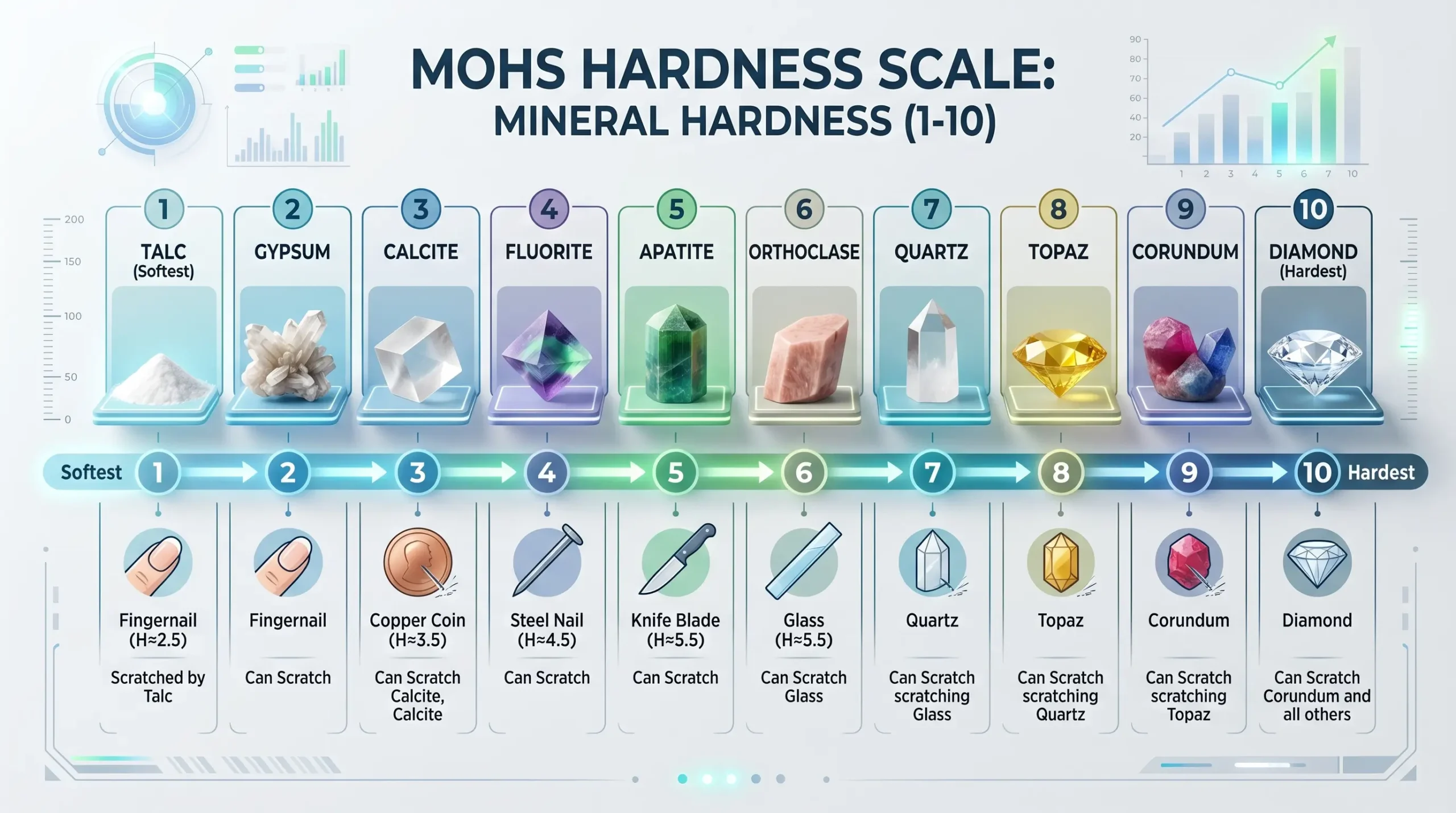
The Mohs hardness scale is the simplest way to measure how well a gemstone resists scratches. Created in 1812 by German mineralogist Friedrich Mohs, this scale ranks minerals from 1 (softest: talc) to 10 (hardest: diamond). The rule is simple: a harder mineral scratches a softer one, but not the reverse. This makes it perfect for quick gem identification in labs or at home.
Important: Mohs hardness ≠ overall durability. A gem can be hard (like diamond, Mohs 10) but still crack if hit. The scale only measures scratch resistance, not toughness. Also, the scale isn’t linear the jump from Mohs 9 (corundum) to 10 (diamond) is much bigger than from 1 to 2.
Despite these limits, the Mohs scale remains the go-to tool for gemologists and jewelry buyers after 200+ years. Use it to pick ring-safe gems: Mohs 8+ (diamond, ruby, sapphire) last forever, while Mohs 6 or below (opal, pearl see the full range on our semi-precious gemstones guide) need protective wear like earrings.
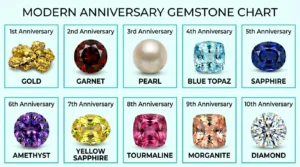
Planning a wedding anniversary gift? Check our anniversary gemstones by year guide to see which stones are durable enough for daily-wear rings and which are better suited to pendants or earrings.
What Is the Mohs Hardness Scale?
The Mohs Hardness Scale is the world’s most widely used hardness scale for identifying minerals and gemstones based on their scratch resistance. Developed by German mineralogist Friedrich Mohs, the Mohs Scale ranks minerals from 1 (Talc) to 10 (Diamond). Today, geologists, jewelers, gemologists, collectors, and students use the Mohs Hardness Scale to compare minerals, identify gemstones, and assess durability for jewelry and industrial applications.
Mohs Hardness Scale Chart for Gemstones and Minerals
This guide includes a complete Mohs Hardness Scale Chart featuring popular gemstones and minerals with their hardness ratings. Learn how the hardness mineral scale works, compare the hardness Mohs values of different gems, and understand why hardness matters when choosing jewelry. Whether you’re searching for the official Mohs Chart, a reliable scale for mineral hardness, or a comprehensive Gemstone Hardness Chart, this guide explains the science behind mineral hardness while helping you compare hundreds of gemstones in one place.
Select Gems Ordered By Mohs Hardness Scale
| Gemstone Name | Mohs Hardness |
|---|---|
| Diamond | 10 |
| Synthetic Moissanite | 9.5 |
| Ruby | 9 |
| Sapphire | 9 |
| Alexandrite | 8.5 |
| Chrysoberyll | 8.5 |
| Holtite | 8.5 |
| YAG | 8.5 |
| Zirconia | 8.5 |
| Rhodizite | 8–8.5 |
| Taafeite | 8–8.5 |
| Spinel | 8 |
| Topaz | 8 |
| Aquamarine | 7.5–8 |
| Red Beryl | 7.5–8 |
| Precious Beryl | 7.5–8 |
| Gahnite | 7.5–8 |
| Galaxite | 7.5–8 |
| Painite | 7.5–8 |
| Phenakite | 7.5–8 |
| Emerald | 7.5–8 |
| Andalusite | 7.5 |
| Euclase | 7.5 |
| Hambergite | 7.5 |
| Sapphirine | 7.5 |
| Dumortierite | 7–8.5 |
| Almandine | 7–7.5 |
| Boracite | 7–7.5 |
| Cordierite | 7–7.5 |
| Danburite | 7–7.5 |
| Grandidierite | 7–7.5 |
| Pyrope | 7–7.5 |
| Schorlomite | 7–7.5 |
| Sekaninaite | 7–7.5 |
| Simpsonite | 7–7.5 |
| Spessartine | 7–7.5 |
| Staurolite | 7–7.5 |
| Turmaline | 7–7.5 |
| Uvarovite | 7–7.5 |
| Amethyst | 7 |
| Aventurine | 7 |
| Citrine | 7 |
| Rock Crystal | 7 |
| Chambersite | 7 |
| Chromdravite | 7 |
| Forsterite | 7 |
| Povondraite | 7 |
| Quartz | 7 |
| Smoky Quartz | 7 |
| Zunyite | 7 |
| Garnet | 6.5–7.5 |
| Jeremejevite | 6.5–7.5 |
| Sillimanite | 6.5–7.5 |
| Zircon | 6.5–7.5 |
| Axinite | 6.5–7 |
| Chalcedony | 6.5–7 |
| Chrysoprase | 6.5–7 |
| Diaspore | 6.5–7 |
| Ferro-Axinite | 6.5–7 |
| Gadolinite | 6.5–7 |
| Grossular | 6.5–7 |
| Hiddenite | 6.5–7 |
| Jadeite | 6.5–7 |
| Jasper | 6.5–7 |
| Kornerupine | 6.5–7 |
| Kunzite | 6.5–7 |
| Mangan-Axinite | 6.5–7 |
| Pollucite | 6.5–7 |
| Serendibite | 6.5–7 |
| Sinhalite | 6.5–7 |
| Spodumene | 6.5–7 |
| Tanzanite | 6.5–7 |
| Thorianite | 6.5–7 |
| Tinzenite | 6.5–7 |
| GGG | 6.5 |
| Magnesio-Axinite | 6.5 |
| Nambulite | 6.5 |
| Vesuvianite | 6.5 |
| Cassiterite | 6–7 |
| Clinozoisite | 6–7 |
| Epidote | 6–7 |
| Hancockite | 6–7 |
| Labradorite | 6–6.5 |
| Marcasite | 6–6.5 |
| Microcline | 6–6.5 |
| Nephrite | 6–6.5 |
| Norbergite | 6–6.5 |
| Oligoclase | 6–6.5 |
| Petalite | 6–6.5 |
| Prehnite | 6–6.5 |
| Pyrite | 6–6.5 |
| Rutile | 6–6.5 |
| Sanidine | 6–6.5 |
| Smaragdite | 6–6.5 |
| Sugilite | 6–6.5 |
| Tantalite | 6–6.5 |
| Amazonite | 6–6.5 |
| Andesine | 6–6.5 |
| Anorthoclase | 6–6.5 |
| Benitoite | 6–6.5 |
| Bixbyite | 6–6.5 |
| Bytownite | 6–6.5 |
| Chondroite | 6–6.5 |
| Helvite | 6–6.5 |
| Hyalophane | 6–6.5 |
| Hypersthene | 5–6 |
| Ilmenite | 5–6 |
| Lapis Lazuli | 5–6 |
| Lazulite | 5–6 |
| Nepheline | 5–6 |
| Neptunite | 5–6 |
| Pargasite | 5–6 |
| Richterite | 5–6 |
| Samarskite | 5–6 |
| Stibiotantalite | 5–6 |
| Tremolite | 5–6 |
| Turquoise | 5–6 |
| Analcime | 5–5.5 |
| Datolite | 5–5.5 |
| Durangite | 5–5.5 |
| Eudialyte | 5–5.5 |
| Goethite | 5–5.5 |
| Herderite | 5–5.5 |
| Hydroxylherderite | 5–5.5 |
| Meliphanite | 5–5.5 |
| Mesolite | 5–5.5 |
| Microlite | 5–5.5 |
| Monazite | 5–5.5 |
| Natrolite | 5–5.5 |
| Nickeline | 5–5.5 |
| Papagoite | 5–5.5 |
| Psilomelane | 5–5.5 |
| Scolecite | 5–5.5 |
| Sellaite | 5–5.5 |
| Thomsonite | 5–5.5 |
| Titanite | 5–5.5 |
| Wolframite | 5–5.5 |
| Yttrotantalite | 5–5.5 |
| Apatite | 5 |
| Bismutotantalite | 5 |
| Childrenite | 5 |
| Chlorapatite | 5 |
| Dioptase | 5 |
| Eosphorite | 5 |
| Flourapatite | 5 |
| Hydroxylapatite | 5 |
| Mangan-Apatite | 5 |
| Odontolite | 5 |
| Rinkite | 5 |
| Schlossmacherite | 5 |
| Smithsonite | 5 |
| Spurrite | 5 |
| Strass | 5 |
| Vayrynenite | 5 |
| Apophyllite | 4.5–5 |
| Augelite | 4.5–5 |
| Charoite | 4.5–5 |
| Gaspéite | 4.5–5 |
| Hodgkinsonite | 4.5–5 |
| Legrandite | 4.5–5 |
| Pectolite | 4.5–5 |
| Scheelite | 4.5–5 |
| Wardite | 4.5–5 |
| Bayldonite | 4.5 |
| Colemanite | 4.5 |
| Parisite | 4.5 |
| Prosopite | 4.5 |
| Yugawaralite | 4.5 |
| Carletonite | 4–4.5 |
| Hübnerite | 4–4.5 |
| Purpurite | 4–4.5 |
| Chabazite | 4–5 |
| Friedelite | 4–5 |
| Lithiophilite | 4–5 |
| Mordenite | 4–5 |
| Triphylite | 4–5 |
| Variscite | 4–5 |
| Zincite | 4–5 |
| Algodonite | 4 |
| Ammonite | 4 |
| Barytocalcite | 4 |
| Fluorite | 4 |
| Hancockite | 4 |
| Leucophanite | 4 |
| Libethenite | 4 |
| Magnesite | 3.5–4.5 |
| Siderite | 3.5–4.5 |
| Ankerite | 3.5–4 |
| Aragonite | 3.5–4 |
| Azurite | 3.5–4 |
| Chalcopyrite | 3.5–4 |
| Creedite | 3.5–4 |
| Cuprite | 3.5–4 |
| Dickinsonite | 3.5–4 |
| Dolomite | 3.5–4 |
| Euchroite | 3.5–4 |
| Langbeinite | 3.5–4 |
| Malachite | 3.5–4 |
| Mimetite | 3.5–4 |
| Pentlandite | 3.5–4 |
| Powellite | 3.5–4 |
| Scorodite | 3.5–4 |
| Shungite | 3.5–4 |
| Sphalerite | 3.5–4 |
| Wavellite | 3.5–4 |
| Wurtzite | 3.5–4 |
| Adamite | 3.5 |
| Anhydrite | 3.5 |
| Chiolite | 3.5 |
| Cacoxenite | 3–4 |
| Coral | 3–4 |
| Ludlamite | 3–4 |
| Anglesite | 3–3.5 |
| Baryte | 3–3.5 |
| Boleite | 3–3.5 |
| Cerussite | 3–3.5 |
| Celestine | 3–3.5 |
| Descloizite | 3–3.5 |
| Greenockite | 3–3.5 |
| Howlite | 3–3.5 |
| Millerite | 3–3.5 |
| Phosphophyllite | 3–3.5 |
| Witherite | 3–3.5 |
| Bornite | 3 |
| Kurnakovite | 3 |
| Shortite | 3 |
| Stolzite | 3 |
| Vanadinite | 3 |
| Whewellite | 3 |
| Serpentine | 2.5–5.5 |
| Pearl | 2.5–4.5 |
| Chrysocolla | 2–4 |
| Jet | 2.5–4 |
| Chalcocite | 2.5–3 |
| Crocoite | 2.5–3 |
| Gaylussite | 2.5–3 |
| Gold | 2.5–3 |
| Inderite | 2.5–3 |
| Lepidolite | 2.5–3 |
| Pyrargyrite | 2.5–3 |
| Silver | 2.5–3 |
| Stolzite | 2.5–3 |
| Brucite | 2.5 |
| Cryolite | 2.5 |
| Linarite | 2.5 |
| Lizardite | 2.5 |
| Proustite | 2.5 |
| Sturmanite | 2.5 |
| Clinochrysotile | 2–3 |
| Fuchsite | 2–3 |
| Muscovite | 2–3 |
| Phosgenite | 2–3 |
| Shomiokite | 2–3 |
| Amber | 2–2.5 |
| Cinnabar | 2–2.5 |
| Ettringite | 2–2.5 |
| Kämmererite | 2–2.5 |
| Mellite | 2–2.5 |
| Senarmontite | 2–2.5 |
| Ulexite | 2–2.5 |
| Villiaumite | 2–2.5 |
| Gypsum | 2 |
| Stichtite | 1.5–2.5 |
| Sulphur | 1.5–2.5 |
| Covellite | 1.5–2 |
| Melonite | 1.5–2 |
| Realgar | 1.5–2 |
| Vivianite | 1.5–2 |
| Palygorskite | 1–2 |
| Pyrophyllite | 1–2 |
| Talc | 1 |
FAQs
The Mohs Hardness Scale is a system used to measure a mineral’s resistance to scratching. It ranks minerals from 1 (Talc), the softest, to 10 (Diamond), the hardest, making it the most widely used hardness scale in geology and gemology.
The Mohs Hardness Scale helps you evaluate a gemstone’s durability and resistance to scratches. Harder gemstones generally withstand everyday wear better, while softer stones need extra care and protection.
Hardness measures a gemstone’s resistance to scratches, whereas toughness refers to its ability to resist breaking, chipping, or cracking. A gemstone can be very hard but still be relatively brittle.
Diamond is the hardest natural gemstone and ranks 10 on the Mohs Hardness Scale. Its exceptional hardness makes it highly resistant to scratches and ideal for everyday wear.
Yes. Many gemstones fall within a hardness range rather than a single value. For example, quartz varieties typically measure 7, while garnets generally range from 6.5 to 7.5, depending on the species.
The Mohs Scale measures the hardness of all minerals, including those used in geology, mining, construction, and industrial applications, as well as gemstones.
Gemstones with a Mohs hardness of 7 or higher, such as diamond, sapphire, ruby, chrysoberyl, spinel, topaz, quartz, and alexandrite, are generally suitable for everyday wear when properly cared for.
No. A higher hardness only means a gemstone is more resistant to scratches. Even very hard gemstones like diamonds can chip or fracture if struck with enough force.
A Mohs Hardness Scale Chart allows you to compare the hardness of different gemstones and minerals, understand their scratch resistance, identify unknown minerals, and choose gemstones that best match your intended use.
You can use our Gemstone Hardness Chart to explore the Mohs hardness ratings of hundreds of gemstones, compare minerals from Talc to Diamond, and quickly find accurate hardness information for identification, education, and jewelry selection.
Conclusion
Understanding the Mohs Hardness Scale is essential for anyone interested in gemstones, minerals, or jewelry. By comparing minerals on the Mohs Scale, you can better understand scratch resistance, gemstone durability, and the suitability of different stones for everyday wear. Whether you’re a collector, jeweler, student, or first-time buyer, a reliable Mohs Hardness Scale Chart makes it easier to compare gemstones and make informed decisions. Explore our complete Gemstone Hardness Chart to discover the hardness ratings of hundreds of gemstones and learn how mineral hardness affects beauty, value, and long-term durability.