Semi Precious Gemstones: Complete Guide to Beautiful and Affordable Stones
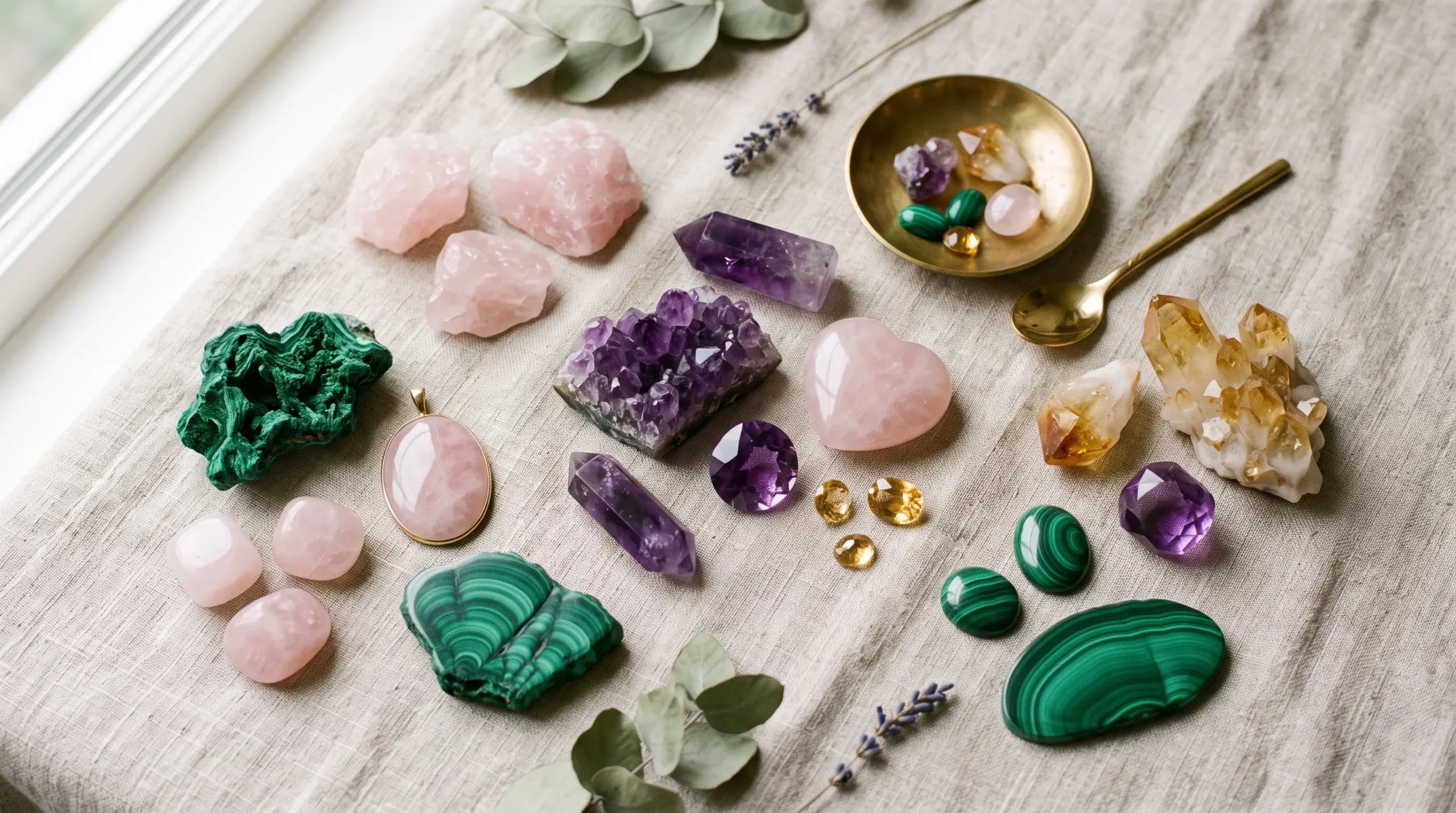
Semi precious gemstones are prized for their incredible variety of colors, unique characteristics, and affordability compared to traditional precious stones. From the rich purple beauty of Amethyst to the vibrant blue-green shades of Turquoise, these gemstones have captivated jewelry love Semi Precious Gemstones: The Complete Buying and Identification Guide
Semi-precious gemstones offer something the four traditional Precious Gemstones can’t match: range. From the ocean blue calm of Aquamarine to the color shifting flash of Opal, these stones cover nearly every color, price point, and style and despite the name, several of them are rarer and more expensive than diamonds.
This guide covers what actually determines a semi-precious gemstone’s value, which stones hold up best in daily jewelry, how to avoid buying a fake, and what to expect to pay.
What Does Semi Precious Actually Mean?
The precious/semi precious split is a 19th-century marketing convention, not a scientific one. Diamond, Ruby, Sapphire, and Emerald earned the “precious” label from historical rarity and royal association everything else, technically, got filed under “semi precious,” regardless of how rare it actually is.
Modern gemologists have mostly abandoned this distinction. A stone’s real value today comes down to five measurable factors: color, clarity, cut, carat weight, and rarity not which historical category it was sorted into. A fine Paraiba Tourmaline can sell for more per carat than a mid quality sapphire. The label tells you almost nothing about what you’ll actually pay.
What Determines a Semi Precious Gemstone’s Value
Color is usually the single biggest factor. Rich, even, saturated color the deep violet of top grade Amethyst, the vivid green of fine Peridot commands a premium over pale or uneven stones of the same species.
Clarity measures visible inclusions. Fewer inclusions generally means better light performance and higher value, though some stones (Emerald, for instance) are expected to have more inclusions than others as part of their natural character.
Cut determines how well a stone reflects light. A poorly proportioned cut can make an otherwise excellent stone look dull cut quality can matter as much as the raw material.
Carat weight drives price non-linearly: larger stones of comparable quality are disproportionately rarer, so price per carat tends to climb with size, not just scale with it.
Rarity is where semi-precious stones can surprise buyers. Alexandrite, Paraiba Tourmaline, and top-grade Jadeite are all technically “semi precious” but routinely outprice mid-tier precious stones because so little of them exists.
The Most Popular Semi Precious Gemstones
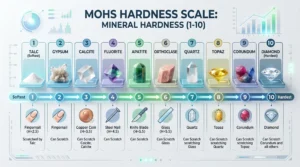
Amethyst Quartz’s purple variety, ranging from soft lavender to deep violet. Durable (Mohs Hardness scale 7) and affordable, making it one of the most practical everyday wear gemstones.
Aquamarine Pale to vivid blue Beryl, prized for exceptional clarity. Hard enough (7.5-8) for daily wear, which is part of why it’s a common engagement-ring alternative.
Citrine Golden yellow to orange quartz. Genuinely affordable at most sizes, with good durability (Mohs Hardness scale 7) for regular wear.
Garnet Best known in deep red, but naturally occurs in green, orange, and purple varieties too. One of the more durable and budget-friendly options across the board.
Peridot Vivid green, and unusual among gemstones for occurring naturally in essentially one color family only. Moderate hardness (6.5-7) means it suits pendants and earrings better than daily wear rings.
Topaz Comes in blue, pink, yellow, and colorless varieties. Hard (Mohs Hardness scale 8) but can chip along internal cleavage planes if struck worth knowing before choosing a ring setting.
Tourmaline Occurs in nearly every color, often within a single crystal (watermelon tourmaline is the famous example). Rare varieties like Paraiba are among the most valuable gemstones in the world, semi precious label notwithstanding.
Opal Famous for play of color, where flashes of spectral color shift as the stone moves. Delicate (Mohs Hardness scale 5-6.5) and better suited to occasional wear pieces than rings worn daily.
Jade Valued across cultures for millennia, associated with prosperity and harmony. High quality Jadeite specifically can rival precious-stone prices.
Turquoise Instantly recognizable blue green, used in jewelry for thousands of years. Porous and relatively soft (Mohs 5-6), so it needs more careful handling than harder stones.
Semi Precious Birthstones by Month
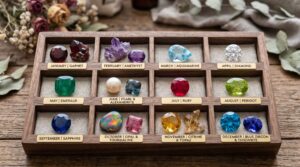
Birthstones by month are one of the most common reasons people search for a specific semi-precious gemstone, so it’s worth knowing where they fall on the calendar:
| Month | Birthstone |
|---|---|
| January | Garnet |
| February | Amethyst |
| March | Aquamarine |
| May | Emerald (precious) |
| June | Pearl / Alexandrite |
| July | Ruby (precious) |
| August | Peridot |
| October | Opal / Tourmaline |
| November | Citrine / Topaz |
| December | Turquoise / Tanzanite |
April and September birthstones (Diamond and Sapphire) fall under the traditional precious category, which is why they’re absent from the semi-precious list above.
Several months have more than one recognized birthstone this comes from differing traditions (the modern list adopted by U.S. jewelers versus older historical and zodiac-based lists), so it’s normal to see a stone listed differently depending on the source.
Common Gemstone Treatments Explained
Most semi-precious gemstones on the market today are treated in some way this isn’t necessarily a red flag, but it does affect both price and care requirements, and any reputable dealer should disclose it.
Heat treatment is the most common and widely accepted it’s used to intensify or stabilize color in stones like Aquamarine, Citrine, and Tourmaline, and generally doesn’t reduce value significantly if disclosed.
Dyeing is common in porous stones like Turquoise and Jade to deepen or even out color. Dyed stones are typically worth less than natural-color equivalents and can fade over time.
Irradiation is used to produce certain colors in Topaz (blue Topaz, in particular, is almost always irradiated and heat-treated) and some Tourmaline. It’s a stable, accepted treatment but affects value versus naturally colored rarities.
Fracture filling used mainly in Emerald and some Opal fills surface-reaching fractures with oil, resin, or glass to improve clarity appearance. This one matters most for care, since filled stones can be more sensitive to heat and chemicals.
Ask directly whether a stone has been treated, and get it in writing for anything beyond a modest purchase. Treatment status should also factor into how you price-compare two stones that otherwise look identical.
Durability should drive the decision as much as color:
- Rings (highest daily impact): Aquamarine, Garnet, Topaz, and Tourmaline hold up best to constant wear.
- Necklaces and pendants (lower impact): Opal, Jade, Amethyst, and Turquoise can be used more freely since they’re not subject to the same daily knocks.
- Earrings (minimal impact): almost any semi-precious stone works, including softer ones like Peridot and Amethyst.
- Bracelets (moderate impact, frequent contact): Garnet, Tourmaline, and Jade are more forgiving choices than delicate stones like Opal.
How to Tell if a Semi Precious Gemstone Is Real
Synthetic and imitation stones have become harder to distinguish by eye, but a few signals help:
- Natural inclusions and minor imperfections are usually a good sign a “flawless” stone at a bargain price is a common red flag, not a bonus.
- Consistent, natural looking color rather than an unnaturally uniform or overly saturated tone.
- Weight that feels appropriate for the stone’s size (glass imitations often feel noticeably lighter).
- Unrealistic pricing if a stone is priced well below typical market rates for its size and species, treat that as a warning sign, not a deal.
None of these home checks substitute for lab verification. For any meaningful purchase, request certification from an accredited gemological laboratory this is standard practice for anything beyond casual costume jewelry.
What to Expect to Pay
Price ranges vary enormously by species and quality tier:
- Widely available and affordable: Amethyst, Citrine, Garnet accessible at nearly every budget.
- Mid-range: Aquamarine, Topaz, Peridot, Tourmaline price climbs with color saturation and clarity.
- Premium to rare: Alexandrite, Paraiba Tourmaline, Black Opal, fine Jadeite can command prices that rival or exceed traditional precious stones.
Origin, treatment history (heat-treated vs. untreated, for example), and current collector demand all shift these ranges further two stones of the same species and size can differ substantially in price based on these factors alone.
Semi-Precious vs. Lab-Created Gemstones
Lab-created (synthetic) versions of many semi-precious stones Amethyst, Citrine, and Emerald in particular are chemically and optically identical to their natural counterparts, since they’re grown from the same mineral composition rather than manufactured from different materials.
The difference is entirely about rarity and origin, not appearance or durability: a lab-created stone will typically cost a fraction of a natural one of comparable size and clarity, because it skips the geological scarcity that drives natural gemstone pricing. Neither is “fake” in the sense of being a different material both are worth disclosing clearly at point of sale, and a lab-created stone should always be priced and marketed as such.
This distinction matters most for buyers thinking about resale or appreciation: natural stones can gain value with rarity and demand over time, while lab-created stones generally don’t, since supply can scale to meet demand.
Mistakes to Avoid When Buying Semi-Precious Gemstones
Buying on size alone. A larger stone with mediocre color or clarity is often worth less than a smaller stone with excellent color carat weight is only one factor among several.
Skipping treatment disclosure. Always ask, even if the seller doesn’t volunteer it. Undisclosed treatments (especially fracture filling and dyeing) are the most common source of buyer disputes.
Assuming “semi-precious” means “low value.” As covered above, several semi-precious stones outprice mid-tier precious ones don’t let the label anchor your price expectations.
Ignoring hardness for the intended use. A stunning Opal is a poor choice for a ring worn daily doing manual work match the stone’s durability to how the piece will actually be worn.
Buying without any documentation for higher value pieces. For anything beyond a modest, decorative purchase, a lack of certification or provenance should factor into your offer price, not just your trust in the seller.
Caring for Semi-Precious Gemstone Jewelry
Most stones clean safely with warm water, mild soap, and a soft cloth. Avoid ultrasonic cleaners and harsh chemicals for porous or heat-sensitive stones Opal and Turquoise specifically need gentler handling than harder stones like Garnet or Topaz. Store pieces separately in soft pouches or lined compartments to prevent stones from scratching each other, and check settings periodically for looseness before a stone is lost rather than after.
Frequently Asked Questions
It’s a historical classification, not a scientific one. Diamond, Ruby, Sapphire, and Emerald were traditionally labeled precious; everything else fell under semi precious. Actual value today depends on color, clarity, cut, carat weight, and rarity not this label.
Alexandrite, Paraiba Tourmaline, Black Opal, and fine Jadeite are typically the most valuable, sometimes exceeding the price of mid-tier precious stones.
Many are. Garnet, Topaz, Aquamarine, and Tourmaline combine good hardness with affordability, making them practical daily wear choices. Softer stones like Opal and Turquoise are better reserved for occasional wear.
Look for natural inclusions, consistent (not artificially perfect) color, and appropriate weight for size then confirm with certification from an accredited gemological lab for any significant purchase.
Rare, high quality stones with limited supply can appreciate, particularly varieties like Paraiba Tourmaline or fine Jadeite where demand consistently outpaces new supply.
Color quality, clarity, cut, carat weight, and authenticity and always buy from a dealer who discloses treatments and origin, ideally with lab documentation for higher value pieces.
Conclusion
The “semi-precious” label is a historical accident, not a reliable guide to value as this guide has covered, stones like Alexandrite, Paraiba Tourmaline, and fine Jadeite routinely outprice traditional precious gemstones because rarity and quality matter more than the category a stone was sorted into two centuries ago.
The buyers who get the best value aren’t the ones chasing the biggest stone or the lowest price they’re the ones who understand what they’re looking at: how color, clarity, cut, and treatment history actually drive price, which stones can handle daily wear versus occasional use, and how to spot the warning signs of an undisclosed treatment or synthetic substitute.
Whether you’re buying your first piece of gemstone jewelry, building a collection, or trying to identify something you already own, the fundamentals in this guide apply the same way: research before you buy, ask about treatments, and match the stone’s durability to how it’ll actually be worn.
Not sure what stone you’re holding? Use our free Gemstone Identification Tool to search by color, hardness, or birthstone and get a complete gemological profile in seconds.